
Pek-pattern plasma cannon
From Halopedia, the Halo wiki
| Pek-pattern Sweeping Turret | |
|---|---|

| |
| Production overview | |
|
Manufacturer: |
|
|
Type: |
|
|
Variants: |
See variants |
| Specifications | |
|
Length: |
|
|
Width: |
65.5 centimeters (25.8 in) (Achoem variant)[3] |
|
Height: |
85.9 centimeters (33.8 in) (Achoem variant)[3] |
|
Weight: |
|
|
Ammunition type: |
|
|
Feed system: |
|
|
Effective range: |
|
| Service history | |
|
In service: |
|
The Pek-pattern Sweeping Turret[2] (UNSC Type classification: Type-52 Directed Energy Support Weapon, T-52 DESW)[1][3][4][5] is a type of light plasma cannon utilised by the Covenant and its remnants.[6] In use as early as 2544,[7] though rarely encountered until 2552, the Pek is a universal replacement for the older Shepsu-pattern plasma cannon.[1][8]
Overview[edit]
Design details[edit]
As with most light plasma cannons, the Pek is a man-portable emplacement capable of boasting a high-rate of fire. Its most distinguishing features, when compared to its sister Shepsu-pattern and Shea'p-patterns, is the presence of three protective energy shields across the top and sides of the weapoon. This energy shield cowling provides protection to the gunner, and is one of the major examples of improvements to the weapon over the older Shepsu.[1] The other major improvement from prior weapons is the installation of two modular[3] cooling modules situated on either side of the plasma emitter.[1] These copper-coloured units are the cannon's primary maintenance need, though they are easily repaired and replaced by their Unggoy operators.[6]
Visually, the main distinction of the Pek from the older Shepsu is in operation: where the Shepsu was mounted on a V-shaped stand, the Pek is instead situated atop a gravity-synched fulcrum similar in nature to a weapon holder.[3] The tripodal base under the gravity emitter contains the weapon's internal generator, which can provide ammunition for extended periods as long as the weapon remains mounted.[4][5][2] However, should the weapon be dismounted, its internal battery is only capable of supporting it for 200 battery units.[3][1][2] Once the power supply has been depleted to 70 shots or lower, the ammunition counter in any compatible HUD of the operator starts to flash as a warning signal.
The ease-of-control and energy shielding of the Pek sees them most commonly employed by Unggoy troops, who are the most fully protected by the shields.[6]
Usage[edit]
Although encountered as early as Operation: WARM BLANKET in 2544,[7] the Pek was not type-classified by the Office of Naval Intelligence until 2552.[8] Its rise in prominence was noted by UNSC analysts as corresponding to the increasing influence of Jiralhanae troops in Covenant deployments during the later years of the war;[9] with Jiralhanae Chieftains particularly preferring the weapon due to their tendency to rip it off its mount and carry it as an infantry weapon.[2]
In more standard use, the Pek has similar use cases to other light plasma cannons; fortifying a given location against enemy assault. They are generally used to fortify positions in which a larger and bulkier Shade turret would be unsuitable.[1][3] The Pek's versatile nature has led to it being widely used across the Covenant's fleet of vehicles and fortifications, with Peks being mounted for close-in defence on Zurdo-pattern Wraiths and Covenant watchtowers. They are also commonly fitted to the doors of Ru'swum-pattern Phantom dropships, allowing the gunner to lay down suppressive fire while infantry forces disembark from the craft.[3]
Variants[edit]
There are a number of variants of the Pek-pattern plasma cannon; most of the differences between them are cosmetic in nature, with the weapons performing functionally identically.
- Truth's fleet variant: a variant of the plasma cannon built by the Assembly Forges of High Charity and predominantly used by the forces of the Fleet of Sacred Consecration and Truth's fleet in the Battle for Earth and Battle of Installation 00. It measures 131.7 centimeters (51.85 in) in length.[4]
- Fleet of Valiant Prudence variant: a commonly-used variant of the Pek used by the forces of the Fleet of Valiant Prudence during the Fall of Reach. It is built by the Assembly Forges, and measures 158.2 centimeters (62.3 in) in length.[1][2][5]
- Achoem Weapons variant: a variant produced by Achoem Weapons in the post-war era for use by remnant factions like Jul 'Mdama's Covenant. It is slightly smaller than the Valiant Prudence iteration at 153.2 centimeters (60.3 in) in length.[3]
- Banished variant: a distinctive variant produced by the Banished for their forces. It has a bulkier, metallic frame and metal shields to replace the energy shields of the standard Pek.[10]
- Wraith variant: altered Pek plasma cannons are mounted in a ring mount on Zurdo-pattern Wraith tanks, featured on all Wraiths produced after 2549. They forgo the energy shields entirely, and have a much smoother carapace.[11][12]
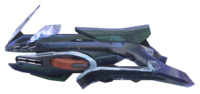 The plasma cannon used by Truth's fleet forces.
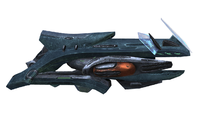 The plasma cannon used in the Fall of Reach.
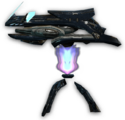 The plasma cannon used by Jul 'Mdama's forces.
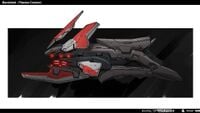 The Banished plasma cannon.


Trivia[edit]

- In Halo 3, Jiralhanae War Chieftains and the Arbiter are able to melee with this weapon while in their hand.
- In the Halo: Reach Multiplayer Beta game stats, the Type-52 DESW was misidentified as the Type-42 DESW. This was not fixed in the final game.
- In Halo: Reach, Sangheili Generals are seen carrying this weapon, but when thrown in the air by a rocket or other explosives, they will put their arms at their sides and "glide" through the air. This is because they do not have the animation for jumping with the turret, an oversight by Bungie.
Gallery[edit]
Concept art and illustrations[edit]
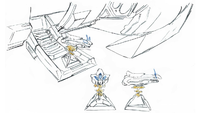 Concept art of the Pek on a Phantom for Prototype in Halo Legends.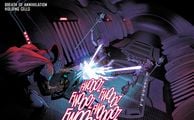
 Robert holding the Banished variant of the Pekin Halo Wars 2.


Halo 3[edit]
 A render of the plasma cannon on its mount.
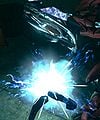 A plasma cannon being detached.
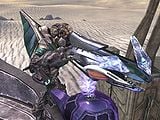 A plasma cannon operated by an Unggoy Heavy in a Covenant watchtower.
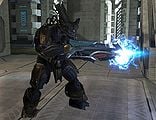 A Jiralhanae War Chieftain firing a detached plasma cannon.
 John-117 firing a detached plasma cannon.
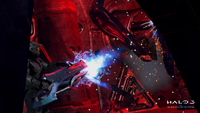 John-117 using a detached plasma cannon to destroy a Scarab's core.
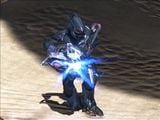 N'tho 'Sraom firing a detached plasma cannon.
 A Spartan-II with a plasma cannon.
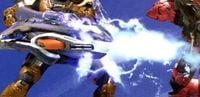 A detached plasma cannon being fired.
 HUD of the plasma cannon while mounted.
 HUD of the plasma cannon while detached.


Halo: Reach[edit]
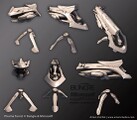 The high-poly source asset for the plasma cannon.
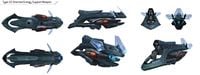 A turnaround reference of the plasma cannon.
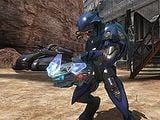 A detached plasma cannon in the Halo: Reach Multiplayer Beta.
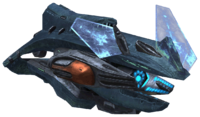 Render of the plasma cannon.
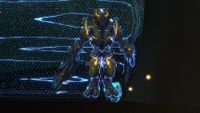 The missing animation for Elites using the plasma cannon when airborne.
 An Unggoy Heavy using the Zurdo-pattern Wraith mounted Type-52 DESW.
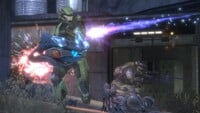 A Spartan using the detached plasma cannon.
 HUD of the plasma cannon while mounted.
 A Trooper operating a plasma cannon attached to a Ru'swum-pattern Phantom's open bay door.
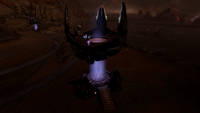 Grunts on a watchtower.


Halo 4[edit]
 HUD Icon of the plasma cannon.
 An Unggoy Heavy manning a plasma cannon on a tripod.
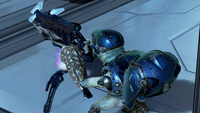 Rear view of the plasma cannon.
 An Unggoy Storm firing a plasma cannon onboard a Ru'swum-pattern Phantom.
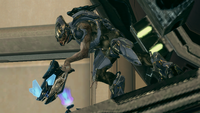 A Sangheili Storm manning a plasma cannon onboard a Phantom.
 A Sangheili Storm carrying a plasma cannon in Spartan Ops.
 A Spartan-IV with a plasma cannon on Landfall.
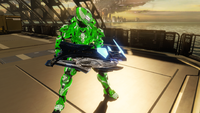 A Spartan-IV with a detached plasma cannon.
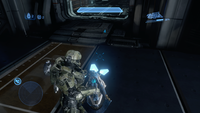 HUD of John-117 with a detached plasma cannon.
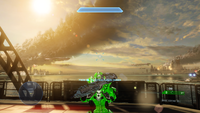 HUD of the plasma cannon while mounted.
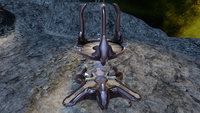 A Covenant watchtower equipped with plasma cannons.


Halo Online[edit]
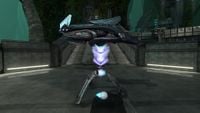 Profile view of the plasma cannon on Guardian.
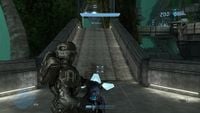 HUD of the plasma cannon while detached.


List of appearances[edit]
- Halo 3 (First appearance)
- Halo 3: ODST
- Halo Legends
- Halo: Blood Line
- Halo: Reach
- Halo: Combat Evolved Anniversary
- Halo 4
- Halo: Escalation
- Halo Wars 2
- Halo: Winter Contention
Sources[edit]
- ^ a b c d e f g h i j k l Halo: The Essential Visual Guide
- ^ a b c d e f g h i j Halo Encyclopedia (2022 edition), page 300
- ^ a b c d e f g h i j k l m n Halo 4: The Essential Visual Guide, page 94
- ^ a b c d e f g Halo Encyclopedia (2011 edition), page 330-331: Material in the 2009 encyclopedia depicts, and concerns, the Halo 3 iteration of the turret.
- ^ a b c d e f g Halo Encyclopedia (2011 edition), page 344-345: Material in the 2011 encyclopedia depicts, and concerns, the Halo: Reach iteration of the turret.
- ^ a b c Halo Waypoint, Plasma Cannon (Retrieved on Apr 27, 2012) [local archive] [external archive]
- ^ a b Halo Legends - The Package (animated short)
- ^ a b Bungie.net, Halo: Reach Ordnance - Type-52 Directed Energy Support Weapon (Retrieved on Oct 13, 2014) [archive]
- ^ Bungie.net, Halo: Reach Career Stats: Page erroneously refers to the T52 as the T42 "The type-42 DESW has become a much more common sight on the battlefield since the Brutes have come to prominence in the Covenant." (Retrieved on Sep 23, 2011) [archive]
- ^ Halo Wars 2, Robert-025 in-game unit
- ^ Bungie.net, Halo 3: ODST Career Stats: Wraith - Gunner "All post-2549 model Wraiths have an extended crew area with a Type-52 DESW in a ring mount" (Retrieved on Jul 23, 2019) [archive]
- ^ Bungie.net, Halo: Reach Career Stats: Wraith - Type-26 AGC (Gunner) "All post-2549 model Wraiths have an extended crew area with a Type-52 DESW in a ring mount" (Retrieved on Sep 23, 2011) [archive]


