
Eos'Mak-pattern plasma pistol
From Halopedia, the Halo wiki
| Eos'Mak-pattern Pistol | |
|---|---|

| |
| Production overview | |
|
Manufacturer: |
|
|
Model series: |
|
|
Type: |
|
| Specifications | |
|
Length: |
|
|
Width: |
|
|
Height: |
|
|
Weight: |
|
|
Ammunition type: |
|
|
Feed system: |
|
|
108 m/s (354 f/s)[5] | |
|
Effective range: |
|
| Service history | |
|
In service: |
|

- "[The plasma pistol] is the bread and butter of Covenant small arms—almost as common as the MA5 is with the UNSC. After the Covenant Carrier jumped there were some areas of Mombasa where plasma pistols covered the ground like leaves—that maneuver killed a bunch of dudes on both sides."
- — Anonymous UNSC E2-BAG/1/7 serviceman[5]
The Eos'Mak-pattern Pistol (UNSC Type classification: Type-25 Directed Energy Pistol, T-25 DEP)[2] also known as the plasma pistol,[5] is a Covenant infantry weapon originally manufactured by the Assembly Forges during the Human-Covenant War. Following the Fall of High Charity, the plasma pistol is manufactured by Iruiru Armory.[4]
Overview[edit]
Design details[edit]
- Main article: Plasma pistol
Manufactured by Iruiru Armory, the Eos'Mak-pattern plasma pistol is a directed-energy weapon employed by the Covenant and its splinter factions. The Eos'Mak-pattern was the most common variant of the plasma pistol, often utilized by the frontline infantry like the Unggoy, Kig-Yar, and Yanme'e.[4] However, the design pattern is associated with an innumerable different sub-classes, much to the consternation of UNSC intelligence officers tasked with categorizing new variants.[3] Certain sub-variants are equipped with tracking sights.[2]
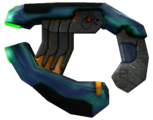 An Eos'Mak-pattern sub-variant employed by the Fleet of Particular Justice.
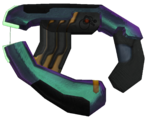 An Eos'Mak-pattern sub-variant employed by the Fleet of Sacred Consecration.
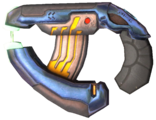 An Eos'Mak-pattern sub-variant employed by Truth's fleet.
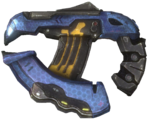 An Eos'Mak-pattern sub-variant equipped with tracking sights.
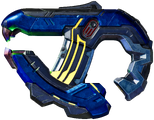 An Eos'Mak-pattern sub-variant with tracking sights employed by the Fleet of Particular Justice.


![An Eos'Mak-pattern sub-variant manufactured on Hesduros.[3]](/File:H4-T25PlasmaPistol-SideRender.png)

Usage[edit]
The Eos'Mak-pattern was the most common variant of the plasma pistol, employed across the Covenant and its splinter factions. It was commonly used by members of the lower caste, such as the Unggoy, Kig-Yar, and Yanme'e.[4][8]
Non-canon and dubious canon appearances[edit]

Silver Timeline[edit]
 |
This article contains information about the Silver Timeline, and is not a part of the established Halo canon. |
Eos'Mak-pattern plasma pistols are used by the Covenant against humanity.[9][10]
Trivia[edit]
- In the PC version of Halo: Combat Evolved, if the player has a modified controller with rapid-fire functionality, they can fire the plasma pistol as fast as the second highest turbo setting, which is as fast as the assault rifle. However, it overheats extremely fast.
- In the Halo trilogy, if the player's plasma pistol is running low on battery, (less than 10%) when they fire it, then it will occasionally splutter and refuse to fire. This may be due to the fact that the power cell is unable to focus the remaining energy into a ball of plasma.
- After killing the Prophet of Regret on "Regret" in Halo 2, he will drop a plasma pistol. He held the same weapon in Halo: Contact Harvest, and was rumored to keep it with him at all times in Halo: The Cole Protocol.
- In Halo 2 for Windows Vista, it is possible to instantly destroy a Karo'etba-pattern Ghost by aiming an overcharged bolt at the metal flaps on the back of the Ghost's wings.
- In Halo 2 for Windows Vista, if the player is carrying the plasma pistol and are in active camouflage, one may see a polygon near the front of the weapon. In Halo 3, while using active camouflage, one can see a square where the heat monitor is. This indicates the hologram is a polygon.
- In Halo 3, if the player overcharges the plasma pistol and slowly release the trigger, it will not fire a shot. The plasma would slowly dissipate and disappear. This can be used as a way to prevent excess battery depletion when an overcharge shot is fired. The plasma pistol in PC versions cannot do this as the player is using a mouse to control the firing.
- In the "Extras" section of the Halo 3: The Official Strategy Guide, it is stated incorrectly that the plasma pistol has a magazine size of 10/100 when it does not even use a magazine at all.
- In Halo 3, it is the only dual-wieldable weapon that does not cause less damage per shot when dual-wielded than when single wielded. (26 head/body shots single- or dual-wielded to kill with normal shields; as compared with the M6G that takes 5 head or 8 body single-wielded but 7 head or 11 body when dual-wielded).
- In Halo 3, if one looks at their shadow whilst holding a plasma pistol, one may notice a "cap" like protrusion on the back of the gun. This is actually the hologram on the gun that indicates if it is overheated.
- In the Halo: Reach Multiplayer Beta, the sound effect for an overcharged blast was the same as when a circuit is hit in Marathon.
Gallery[edit]

Concept art and artwork[edit]
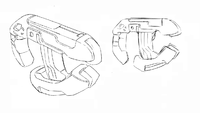 Concept art of the plasma pistol for Halo Legends, Homecoming.
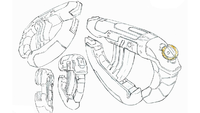 Concept art of the plasma pistol for Halo Legends, Prototype.
 Myras Tyla holding a plasma pistol in Halo: Uprising.
 An Unggoy holding a plasma pistol on Kojo Agu in Halo: Helljumper.
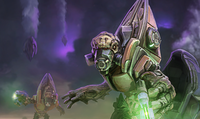 Two Unggoy Minors wielding plasma pistols in Halo: Spartan Assault.


Halo: Combat Evolved[edit]
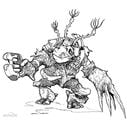 Concept art of a Flood-infected Unggoy wielding an Eos'Mak-pattern plasma pistol.
 HUD icon of the Eos'Mak-pattern plasma pistol.
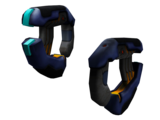 Angled views of the Eos'Mak-pattern plasma pistol.
 Render of a Kig-Yar wielding an Eos'Mak-pattern plasma pistol.
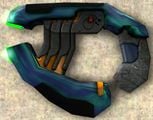 An Eos'Mak-pattern plasma pistol on the ground.
 An Unggoy Major wielding the Eos'Mak-pattern plasma pistol.
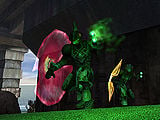 Two Kig-Yars armed with the Eos'Mak-pattern plasma pistol.
 First-person view of the Eos'Mak-pattern plasma pistol.
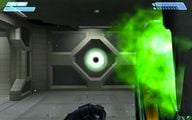 First-person view of an Eos'Mak-pattern plasma pistol overheating.
 First-person view of an Eos'Mak-pattern plasma pistol being opened.


Halo 2[edit]
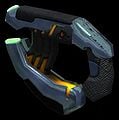 Angled view of the Eos'Mak-pattern plasma pistol.
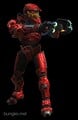 A Spartan dual wielding Eos'Mak-pattern plasma pistols.
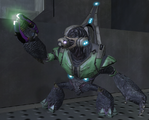 An Unggoy Heavy wielding the Eos'Mak-pattern plasma pistol.
 A Kig-Yar Minor illuminated by the glow of an Eos'Mak-pattern plasma pistol.
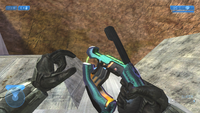 First-person view of an Eos'Mak-pattern plasma pistol being opened.


Halo 3[edit]
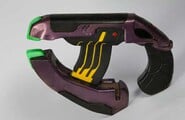 The plasma pistol prop built by WETA Workshop for Halo: Landfall.
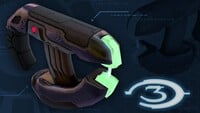 Promotional image of the Eos'Mak-pattern plasma pistol.
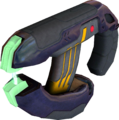 Angled view of the Eos'Mak-pattern plasma pistol.
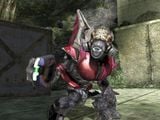 An Unggoy Major wielding the Eos'Mak-pattern plasma pistol.
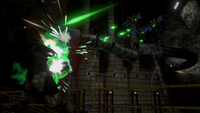 A Yanme'e swarm firing their Eos'Mak-pattern plasma pistols at a UNSC marine.
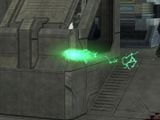 An overcharged plasma bolt mid-flight.
 A Sangheili dual-wielding Eos'Mak-pattern plasma pistols in multiplayer.
 A Sangheili fires a plasma pistol in multiplayer.
 A Sangheili charges a plasma pistol in multiplayer.
 A Spartan overcharging an Eos'Mak-pattern plasma pistol in multiplayer.
 First-person view of overcharged plasma pistols in action in Halo 3.
 First-person view of an Eos'Mak-pattern plasma pistol being opened.


Halo 3: ODST[edit]
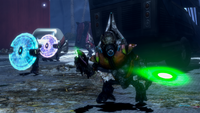 An Unggoy firing an Eos'Mak-pattern plasma pistol.
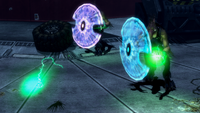 A Kig-Yar firing scaled burst from the Eos'Mak-pattern plasma pistol.
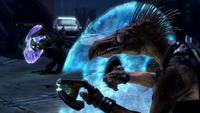 Two Kig-Yar with Eos'Mak-pattern plasma pistols.
 A Yanme'e Ultra firing an Eos'Mak-pattern plasma pistol.


Halo: Reach[edit]
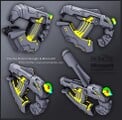 A render of the high-poly source asset for the plasma pistol.
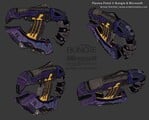 The in-game low-poly asset.
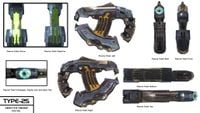 A study of the Eos'Mak-pattern plasma pistol.
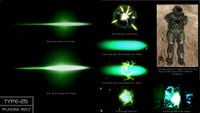 A study of the Eos'Mak-pattern plasma pistol.
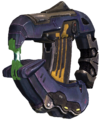 A left-facing render of an active plasma pistol from the pre-beta development stage.
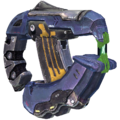 A right-facing render of an active plasma pistol from the pre-beta development stage.
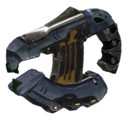 A Halo: Reach beta render of an inactive plasma pistol.
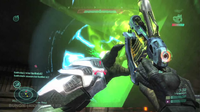 First-person view of an Eos'Mak-pattern plasma pistol overheating in the beta.
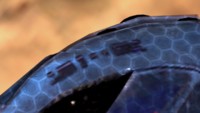 Pattern on the Eos'Mak-pattern plasma pistol.
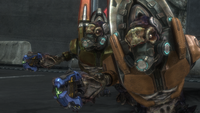 Two Unggoy wielding Eos'Mak-pattern plasma pistols.
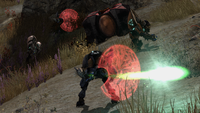 A Kig-Yar Major firing a scaled burst from the Eos'Mak-pattern plasma pistol.
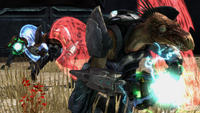 Two Kig-Yar overcharging their Eos'Mak-pattern plasma pistols.
 A Spartan fires a scaled burst from the Eos'Mak-pattern plasma pistol.
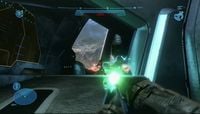 First-person view of the Eos'Mak-pattern plasma pistol.
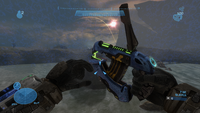 First-person view of an Eos'Mak-pattern plasma pistol being opened.


Halo: Combat Evolved Anniversary[edit]
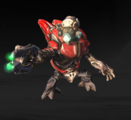 An Unngoy Major with an Eos'Mak-pattern plasma pistol.
 Two Unggoy wielding with Eos'Mak-pattern plasma pistols.
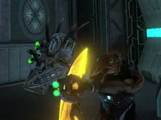 A Kig-Yar Major armed with an Eos'Mak-pattern plasma pistol.
 First-person view of the Eos'Mak-pattern plasma pistol on The Silent Cartographer.
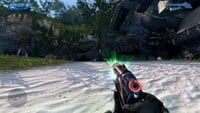 John-117 overcharging the Eos'Mak-pattern plasma pistol.
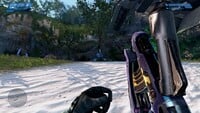 First-person view of the Eos'Mak-pattern plasma pistol overheating.
 First-person view of an Eos'Mak-pattern plasma pistol being opened.


Halo 4[edit]
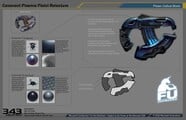 Reference model sheet of the Eos'Mak-pattern plasma pistol.
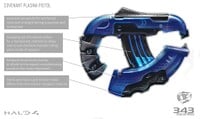 Reference sheet for the Eos'Mak-pattern plasma pistol.
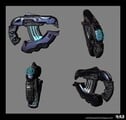 Orthographic views of the Eos'Mak-pattern plasma pistol.
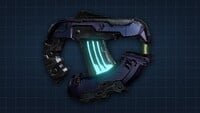 Render of the Eos'Mak-pattern plasma pistol.
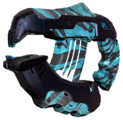 The FCT (Fracture) skin.
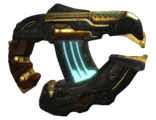 The BPL (Boilerplate) Skin.
 A Kig-Yar Heavy wielding an Eos'Mak-pattern plasma pistol.
 A Sangheili with the Eos'Mak-pattern plasma pistol.
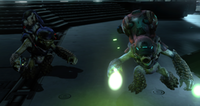 Two Unggoy with the Eos'Mak-pattern plasma pistol.
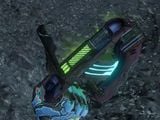 The upper firing coil within the interior of an Eos'Mak-pattern plasma pistol.
 First-person view of the Eos'Mak-pattern plasma pistol.
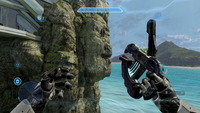 First-person view of an Eos'Mak-pattern plasma pistol being opened.


Halo 2: Anniversary[edit]
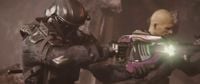 Walpole wielding a plasma pistol in Another Day at the Beach.
 Two Unggoy Minors firing their plasma pistols in Halo 2: Anniversary campaign.
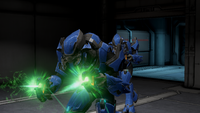 Sangheili Minors dual-wielding plasma pistols in Halo 2: Anniversary campaign.
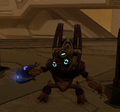 A Special Operations Unggoy with a plasma pistol in Halo 2: Anniversary campaign.
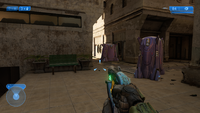 First-person view of the plasma pistol in Halo 2: Anniversary campaign.
 First-person view of dual-wielding plasma pistols in Halo 2: Anniversary campaign.
 A Spartan using a plasma pistol in Halo 2: Anniversary multiplayer.
 A Spartan dual-wielding plasma pistols in Halo 2: Anniversary multiplayer.
 A Sangheili dual-wielding plasma pistols in Halo 2: Anniversary multiplayer.
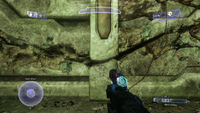 First-person view of the plasma pistol in Halo 2: Anniversary multiplayer.
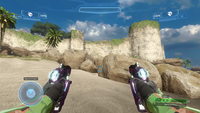 First-person view of dual-wielding plasma pistols in Halo 2: Anniversary multiplayer.


Halo: Fireteam Raven[edit]
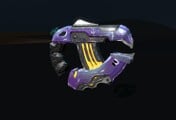 A render of the plasma pistol asset in Halo: Fireteam Raven.
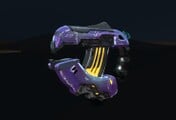 A render of the plasma pistol asset in Halo: Fireteam Raven.
 A render of the plasma pistol asset in Halo: Fireteam Raven.


Halo Online[edit]
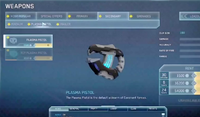 The default plasma pistol in the menu in Halo Online.
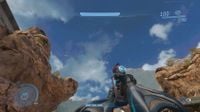 The default plasma pistol on Diamondback.
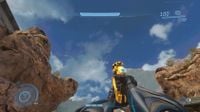 The golden Power Plasma Pistol on Diamondback.


Halo: Campaign Evolved[edit]
 A Sangheili Major wielding a plasma pistol.
 A Sacristan Kig-Yar Procurator wielding a plasma pistol.
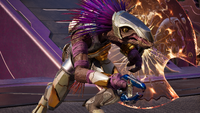 Close-up of a Kig-Yar Procurator wielding a plasma pistol.
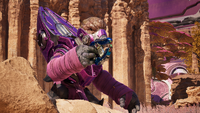 A Sacristan Unggoy Mendicant wielding a plasma pistol.
 A Sacristan Kig-Yar Devotee with an overcharged plasma pistol.


List of appearances[edit]
- Halo: The Fall of Reach (First appearance)
- Halo: Combat Evolved
- Halo: The Flood
- Halo: First Strike
- Halo 2
- Halo Graphic Novel
- Halo: Ghosts of Onyx
- Halo: Uprising
- Halo 3
- Halo: Contact Harvest
- Halo: The Cole Protocol
- Halo Wars: Genesis
- Halo Wars
- Halo: Helljumper
- Halo 3: ODST
- Halo Legends
- Halo: Evolutions - Essential Tales of the Halo Universe
- Halo: Blood Line
- Halo: The Return
- Halo: Reach
- Halo: Fall of Reach
- Halo: Combat Evolved Anniversary
- Halo: The Thursday War
- Halo 4
- Halo: Spartan Assault
- Halo: Initiation
- Halo: Escalation
- Halo: Mortal Dictata
- Halo: Broken Circle
- Halo 2: Anniversary
- Halo: Spartan Strike
- Halo: The Fall of Reach - The Animated Series
- Halo: Shadow of Intent
- Halo: Ground Command
- Halo Mythos
- Halo: Fractures
- Halo Wars 2
- Halo: Envoy
- Halo: Retribution
- Halo: Recruit (Non-canonical appearance)
- Halo: Fireteam Raven
- Halo: Silent Storm
- Halo: Official Spartan Field Manual
- Halo: Lone Wolf
- Halo: Meridian Divide
- Halo: Shadows of Reach
- Halo: Divine Wind
- Halo: The Television Series Season One
- Halo: The Television Series Season Two
- Halo: 'Ghosts & Glass' by B. Giraud
- Halo: Edge of Dawn
- Halo: Campaign Evolved
Sources[edit]
- ^ Halo: Official Spartan Field Manual, page 187
- ^ a b c d Halo: The Essential Visual Guide, page 143
- ^ a b c d e f g h i j Halo Waypoint, Universe - Weapons - Plasma Pistol (Retrieved on Jan 25, 2021) [local archive] [external archive]
- ^ a b c d e f g h Halo Encyclopedia (2022 edition), page 291
- ^ a b c d e f Bungie.net, Type-25 Directed Energy Pistol (Retrieved on Jan 31, 2021) [local archive] [external archive]
- ^ a b Halo 4: The Essential Visual Guide, page 84
- ^ a b Halo Encyclopedia (2009 edition), page 320
- ^ a b c Halo Encyclopedia (2011 edition), page 334
- ^ Halo: The Television Series, episode Contact
- ^ Halo: The Television Series, episode Reckoning
| ||||||||||||||


