
Biofoam
From Halopedia, the Halo wiki


Biofoam (short for biomedical foam)[1][2] is a self-sealing, space-filling coagulant and an antimicrobial, tissue-regenerative foam polymer used by the United Nations Space Command as a form of medical first aid. This foam keeps damaged organs in place and helps stop bleeding and hemorrhaging. The medicinal compound is morphophetamine in a polyethyltriphosphate liquid medium dispensed with nitrous oxide. When applied, the polyethyltriphosphate and nitrous oxide mix to create a foaming effect that can encapsulate, disinfect, and numb wounds.[3] Within the Unified Earth Government, biofoam is an OTC-legal product and can be purchased legally "over-the-counter."[2]
Overview[edit]
Contents[edit]
Prior to application, biofoam consists of two substances: nitrous oxide and morphophetamine-infused liquid polyethyltriphosphate,[3] with the latter incorporating MediGel, a product of Optican.[4]
Usage and effects[edit]

Biofoam is generally contained within a cylindrical canister or bottle with a deployable nozzle used to apply the mixture directly to the affected area of a patient.[5] Sealed combat armour such as MJOLNIR exoskeletons or vacuum suits may have ports on them to allow for the injection of biofoam into the suit without having to remove it. If injected in this manner, the medic must use a small plunger to feed the substance into the wound.[6]
When applied and exposed to air, the nitrous oxide and liquid polyethyltriphosphate mix and produce a foaming reaction.[3] The foam strongly adheres to tissues and simultaneously releases encapsulated medical compounds that advances clotting, disinfects the wound, and eventually numbs pain. After a short duration of time, the foam applied will set and become a semi-rigid, porous mass internally, which forms a hardened skin on regions of the body exposed to air.[2] In some cases, additional medical tape, bandages,[7] or needlework may be required to close up the injury and ensure the foam does not leak out.[8] The standard dosage is 10 centiliters (10cL) or 3.38 fl. oz.[9]
Despite biofoam's painkilling properties,[10] for the first few seconds after its application to an open wound it is known to be very painful,[3] to the point of overpowering the pain of the original wound.[11] This effect has been described as feeling like "burning ants crawling around the wound"[12] and "thousands of tiny knives" stabbing the recipient.[13] Biofoam does not seem to have this kind of painful reaction when applied to an unwounded area, as during the Battle of Mombasa, Jonathan Doherty was seen spraying a small amount onto his uninjured fingers and did not react in pain.[14] To counter the pain of the biofoam, medics may use polypseudomorphine on their patients.[15]
The effects of biofoam are temporary, and after a few hours, it simply breaks down. Therefore, it is normally a form of first aid, used only as a temporary sealant until proper medical attention can be sought.[3][7][16] In extremely rare cases, allergic reactions to biofoam have been documented. Edema is a rare side effect of biofoam, caused by excess fluid trapped in the body's tissues.[2] In some cases, application of the foam may fail, resulting in the foam coagulating into several smaller solid chunks that remain moving inside the wound, which can cause further pain and exacerbate the injury.[10] In other cases, biofoam may set wrong, resulting in the biofoam hardening and setting a broken limb at the wrong angle.[17]
Applications[edit]
Biofoam is often used as a medical option when there are no medical personnel available. Bottles of biofoam can be found in health packs.[18][19][16] UNSC medics will use it as a sealing agent during treatment in the field.[3] The MJOLNIR Mark VI,[20] MJOLNIR GEN2,[21][22] and MJOLNIR GEN3[23] armors contain automatic biofoam injectors, which negate the need for their Spartan wearers to use health packs.
Trivia[edit]
The closest equivalent in the modern world to biofoam is Quikclot combat gauze, which utilizes kaolin nanoparticles impregnated into gauze. It is designed to stop moderate to severe bleeding and stabilize a combat casualty. However, it is not a foam, and as gauze, it must be packed into the wound. An experimental foam developed in late 2012 by DARPA also bears many similarities to biofoam, as it is capable of packing combat wounds and halting internal bleeding.
Gallery[edit]

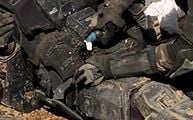 Biofoam being used in Halo: Landfall.
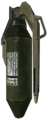 A render of a biofoam canister in Halo 3: ODST.

