The Wildlife of Halo
From Halopedia, the Halo wiki
The following is an overview for a hypothetical Wildlife of Halo field guide, akin to other published art/lore books from Microsoft such as Halo: Warfleet or the Halo Encyclopedia. Its aim is to showcase the art and science of the Halo universe.
This is a work-in-progress document that may not be complete as of this reading.
Overview
This sandbox represents the proposed text and artwork for The Wildlife of Halo, as well as the general structure of the book and how it corresponds to the story of humanity's exploration of the galaxy within Halo lore. The intent is to tell the narrative of humanity's expansion from Earth throughout the Orion Arm from a scientific perspective, including the ecological mysteries that emerged on human colony worlds (foreshadowing later discoveries), the revelations brought about by the knowledge of Covenant space, and finally the mysteries of the Forerunners and their various installations.
The information presented here does not accord with Halopedia's standards for accurate lorekeeping, nor does it intend to. Instead of presenting only hard data from established sources, this document also includes elements of original lore, as though the text here were to be published as a reference book for fans to pore over and learn from. Original lore that is not part of official Halo canon may appear with explanatory notes,[Note 1] though not in all instances.
When reading the guide in this format, keep in mind that each section or sub-section as formatted here on the wiki implies a page break. Full-size images represent artwork that would appear at the start of a new "chapter" within the book, typically a two-page spread for maximum visual impact, introducing a new location, which subsequent pages explore in detail. Images presented as part of a gallery would--in the published book--be formatted according to the needs of the page and the text they accompany, but that design is not included here.
The book currently sits at a proposed 133 pages.
"Empty" gallery images indicate an opportunity for Halo Studios to commission new artwork from proven artists. In-game screenshots are likewise used as placeholders, with 2D conceptual art or sketches preferred for the final book.
This is particularly exciting as the artist has the chance to contribute lore conceived during the composition of the images towards official canon, fleshing out unexplored corners of the Halo universe. Some sections of the book will also provide a unique opportunity to collaborate with real astronomers and scientists, especially where the Halo universe overlaps with real-world data. Some examples of these include Holocene ecological trends, Solar System colonies, terraforming processes, and colonies that correspond to real exoplanets. These opportunities for multidisciplinary collaboration will help elevate the art and science at the heart of this book.
Work on this page began on October 18th, 2024. This is a work-in-progress document that may not be complete as of this reading.
Introduction
In-universe introduction to the book and its xenobiologist author/framing device. Ellen Anders presents the most established xenobiologist character from which to frame the narrative, but an original civilian character is preferred, as this can be used to establish how information about the Forerunners/Flood is shared or sequestered between the UNSC and civilian groups.
Human Sphere
Prehistoric Earth

Emerging from prehistoric Africa, our species was one of many hominids that evolved on Earth. This period in our evolutionary history is a great mystery to scientists, with debate about what caused such a variety of hominid forms to diversify around this time, only to shortly thereafter be overtaken by a single dominant species. Homo sapiens began as a tribal species worshipping totemic animal spirits, but with an intense proclivity for exploration and adventure. This lust for the unknown led us to conquer the planet, spreading to every corner of the globe, speaking many languages, interpreting the universe through many religions, constructing great works of art. We conquered fire, tamed electricity, built great cities, learned the secrets of the universe...


Earth

...And our civilization was mighty. But this came at a cost. Overpopulation was a serious concern as more and more people crowded into less and less land, concentrating resources in cities and sucking dry the natural world. Wars between great nations swept the land, ravaging all in their wake. As our species increasingly relied on and expanded its technology, the climate itself was changed by the engines of industry. Coastlines were altered by rising sea levels. Ecosystems died out. And then, as the artificially-intelligent minds we had built sought solutions to our problems, one came... in the form of the Shaw-Fujikawa Translight Engine.
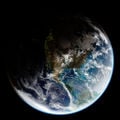
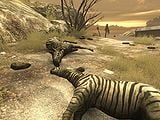 Ecological outlook not so good in 2552


Climate and the Holocene Extinction
Humanity has had a long history of ecological exploitation, increasing in scope as our technological capacity to alter the world grew. With humanity's spread across the globe, naturally threatened and at-risk animal populations--such as those limited to singular, isolated environments--were the first to have extinction at our hands. Organisms like the dodo bird, the great auk, the carrier pigeon, and certain cetacean populations were wiped out in the 18th and 19th centuries due to overhunting. During the Industrial Revolution, the means of mass-extermination increased. More and more populations began to drop off the face of the Earth at humanity's hands. Increased environmental population came hand in hand with the combustion engine and the increased concentration of toxic compound into factory environments. Organisms that depended on healthy bio stability in the affected areas began to suffer slow population decline. Beginning with the advent of inter-continental air travel, the introduction of invasive species across all global ecosystems meant native organisms were out-competed by more efficient organisms that they didn't evolve to compete with. By the 24th century, scientists had noted that cross-contamination of invasive organisms had become the greatest threat to biodiversity on Earth. Many previously remote ecosystems have homogenized, incorporating foreign organisms into local ecosystems. As such, life forms that were previously only found in one environ can often be found across the entire globe. In the current day of the 26th century, scientists are beginning to acknowledge that this process has been occurring--albeit at a slower rate--on our extrasolar colonies. Today, many species that once flourished in the wild can only be found in zo