
F-99 Wombat
From Halopedia, the Halo wiki
| F-99 Wombat | |
|---|---|

| |
| Production information | |
|
Manufacturer: |
|
| Technical specifications | |
|
Length: |
11.7 meters (38.5 ft)[1] |
|
Width: |
8.6 meters (28.1 ft)[1] |
|
Height: |
3.3 meters (10.9 ft)[1] |
|
Mass: |
17.2 metric tons (16.9 LT; 19.0 ST)[1] |
|
Armament: |
2 missiles[2] |
|
Crew: |
Unmanned[1] |
| Usage | |
|
In service: |
|
|
Role(s): |
Unmanned combat aerial vehicle (UCAV) |
|
Affiliation: |
|
The F-99 "Wombat" Unmanned Combat Air Vehicle is an unmanned combat aerial vehicle (UCAV) manufactured by Misriah Armory and employed by the United Nations Space Command.[1]
Overview[edit]
Design details[edit]
The F-99 Wombat is an unmanned drone that seats no human crew, but instead relies on an on-board artificial intelligence for flight. Typically, the Wombat is flown by an onboard non-volitional "dumb" AI when performing routine flight and patrol tasks, but can be taken over by a remote human pilot or even a volitional "smart" AI for more complex scenarios.[1] The craft has two weapons pylons mounted underneath the drone, which can be used to mount missiles, alongside an integrated optics package that can aim down.[2] Final control of targeting and weapons release can be withheld for a remote operator or AI even when AI-piloted.[1]
Wombat drones are compatible with a number of UNSC ground-based targeting systems linked with the overall battle network. These include Target designators like the H-295 model,[3] and the AKIS helmet designed to maximise range-finding capabilities for Wombats among other UNSC aircraft like the S-14 Baselard. The P237-THEIATEK optical suite was designed for the AKIS helmet to incorporate a range of UAV imagery.[4]
Usage[edit]
The Wombat, and drones like it, make up a majority of the aircraft fleets fielded by the UNSC Air Force.[5] They are capable of being launched from ocean-going aircraft carrier platforms such as the Crassus-class supercarrier.[6] They can be used in a variety of roles ranging from interception to tactical ground-attack and reconnaissance.[1]
Operational history[edit]

During the Battle of Mombasa in October 2552, numerous F-99 UCAVs were deployed in reconnaissance elements numbering two to three aircraft to the city of New Mombasa, deploying from Crassus-class supercarriers a few kilometers off the coast.[6] UNSC Crassus was involved in resupplying Wombat and D77-TC Pelican strike sorties during the conflict.[8] They provided air support for embattled Marines across the city, particularly the Uplift Nature Reserve. The collective optical feeds provided by drones could also be accessed by ground forces through the UNSC battle network.[9] One of these drones crashed into a statue in front of the Reserve and its ejected optics package was later found by a lone ODST.[10][11] Following the war's end, F-99s were used by the security detachment protecting the Voi Excession to prevent unauthorised entry into portal airspace.[12]
The Surakan Militia Volunteers had an unknown number of Wombats. In 2558, during the Carrow Conflict, the SMV used an F-99 to spy on the Jiralhanae position, it managed to transmit several images before being shot down.[13]
Production notes[edit]
The F-99 Wombat was originally going to be featured in Halo 3.[14] Though they were omitted from the final game, they were redesigned and featured in Halo 3: ODST. Drones of a different model, which are based directly on the concept art, appear in the background of the multiplayer map Longshore. However, given the depiction of the craft in Longshore as distant background details, it is possible that these are simply meant to be low-detail renderings of the F-99.
The Wombat's design was used as the basis for a cut spacecraft designed during the production of Halo: Reach.
Trivia[edit]
Unlike the majority of UNSC air vehicles (which bear the names of birds or other flying animals), the Wombat bears the name of an arboreal marsupial native to Australia.
Gallery[edit]

|
Browse more images in this article's gallery page. |
Development images[edit]
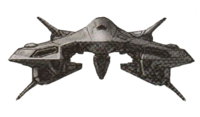
Concept art of the Wombat The Art of Halo 3.
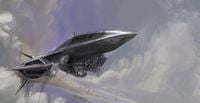
Scenery concept of the F99.
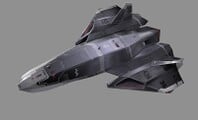
Concept art of the drone.
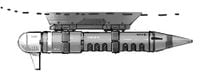
Concept art of a weapon on the drone.
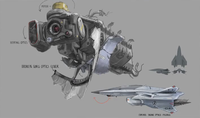
Concept art of the drone's optics package.
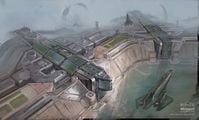
A concept illustration of ONI Alpha Site, depicting Wombats in flight.


Screenshots[edit]
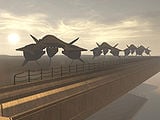
Drones of a different type on the carrier off the coast of Longshore. These drones are based on Halo 3 concept art rather than the version seen in Halo 3: ODST.
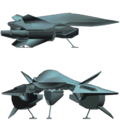
Renders of the Wombat sprites used in Halo 3, with a clear look at the drone's landing gear.
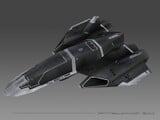
A render of the final drone asset.
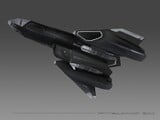
A render of the final drone asset.
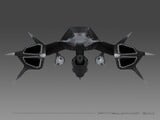
A render of the final drone asset.
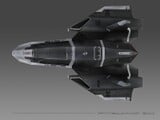
A render of the final drone asset.
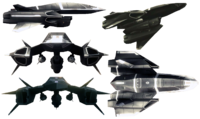
An overview of the drone fighter.
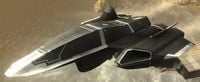
A close-up of a Wombat in flight over the Uplift Reserve.
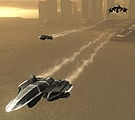
Three F-99 UCAVs flying in formation over New Mombasa.
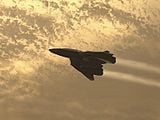
An underside view of the drone.


List of appearances[edit]
- Halo 3
- Mythic II Map Pack (First appearance)
- Halo 3: ODST
- Halo: Reach (Indirect mention)
- Halo: Hunters in the Dark
- Halo: Envoy (Mentioned only)
Sources[edit]
- ^ a b c d e f g h i j Halo Encyclopedia (2022 edition), page 154
- ^ a b Halo 3: ODST, Wombat in-game model
- ^ Halo 4: The Essential Visual Guide, page 72
- ^ Halo Waypoint, Canon Fodder - Pen Umbra (Retrieved on Apr 25, 2021) [archive]
- ^ Halo Encyclopedia (2022 edition), page 60
- ^ a b Halo 3, multiplayer map Longshore
- ^ Halo Legendary Crate, Data Drop #2
- ^ Halo Waypoint, Canon Fodder - Ship Strike (Retrieved on Apr 20, 2023) [archive]
- ^ Halo 3: ODST, campaign level Tayari Plaza
- ^ Halo 3: ODST, campaign level Mombasa Streets
- ^ Halo 3: ODST, campaign level Uplift Reserve
- ^ Halo: Hunters in the Dark, chapter 4
- ^ Halo: Envoy, chapter 11
- ^ The Art of Halo 3, page 39


